Why Our Roads Are Where They Are
Why Our Roads Are Where They Are
Have you ever looked at a map and wondered why the roads are where they are? At first glance, you may look and think there must have been a straighter, more direct way to get from point A to point B. There are multiple reasons why our roads and interstates are laid out the way they are. It helps to understand that these trails and roads occurred gradually throughout the modern history of our country.
Geography
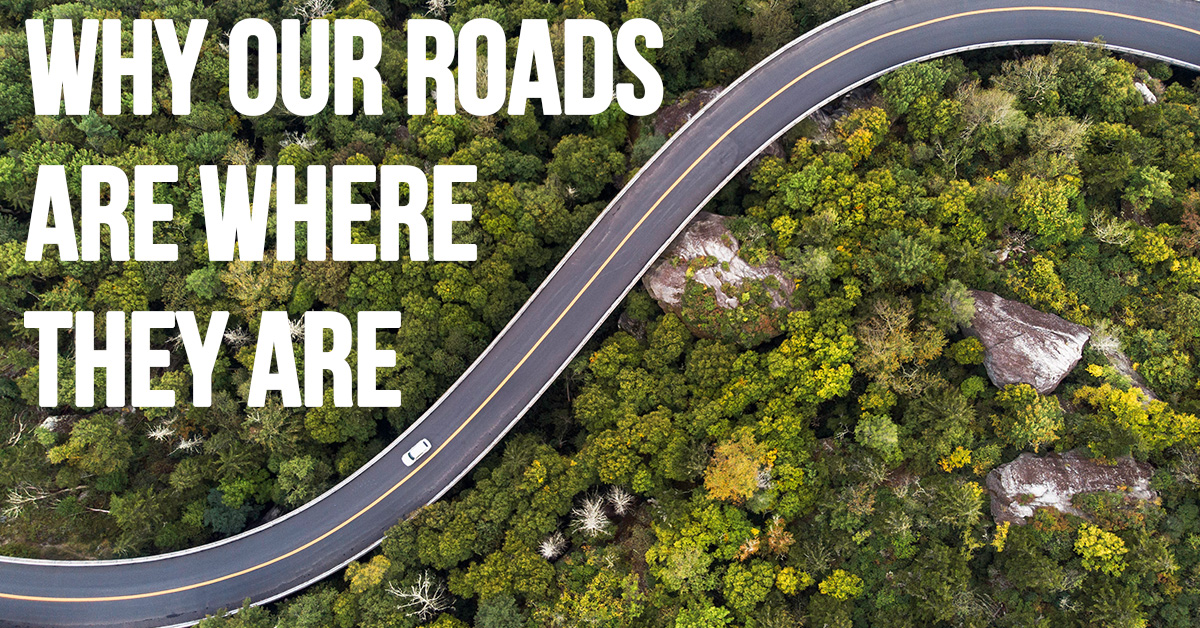
Perhaps the biggest factors in how our roads are laid out today are topography and geology. Roads often found themselves following rivers, where the land was relatively even. Roads were forced to go around insurmountable peaks, rock formations, and wide bodies of water. If a road turns or changes directions, it is often because some natural element may make that turn necessary.
Borders
Roads are often influenced by governmental borders and boundaries. Frequently, road maintenance has been based on jurisdiction, and, although not a major factor, how and where roads are laid out has been influenced by city, county, state, and even national borders.
Established Routes
We may not appreciate that many of our modern roads and highways have their roots in locations in old trails where settlers moved west and where cattle were driven. Time and time again, you will find that modern freeways often mimic these old horse-drawn trails.
Railroads
We often forget that railroads preceded the automobile. This meant that it was up to the railroads to determine the most efficient way to get from one place to another. The railways often used not only geography and old established routes as the basis of how tracks were laid out, but also wanted to include desired destinations along their railways.
Interstates
The most recent major influence on how we get from one place to another by vehicle is the Interstate Highway System. This national project took decades to complete and efficiently connects our entire country. If one looks at a pre-interstate highway map of the United States, you can see how the Interstate system followed some of our most established routes.
It may not seem like it, but our highway system is incredibly efficient. It is the result of trial and error through generations.
We are all looking for more efficient ways to do things. When it comes to car insurance, that can mean contacting one of our independent insurance agents. They can shop from our network of insurance companies to find the best coverage at a price you can embrace. Connect with us to get started.
Do you have questions about your insurance? Find an insurance agent near you with our Agent Finder
Search All Blogs
Read More Blogs

Reviewing Your Umbrella: Do You Need Personal Liability Protection Beyond Your Home Policy?
Protect your personal net worth and future earnings with a high-limit personal umbrella insurance policy.

Hitting the Trails: Why October Is the Ultimate Month for Hiking and Outdoor Exploration
Make the most of autumn weather with tips for safe, scenic weekend hiking and outdoor adventures.

Umbrella Policies for Businesses: Adding an Extra Layer of Defense Against Major Lawsuits
Shield your business assets from massive liability claims with a commercial umbrella policy.

Business Continuity Planning: Using Key Person Life Insurance to Protect Your Enterprise
Safeguard your company’s financial stability and continuity with strategic key person life insurance.

Understanding Uninsured Motorist Coverage: The Hidden Shield on Your Auto Policy
Protect yourself from reckless drivers with comprehensive uninsured motorist policy coverage.

Smart Home Tech and Insurance Discounts: How Automation Lowers Your Premiums
Lower your home insurance bills by integrating smart home monitoring and safety technology.

Fueling Your Body for Cooler Days: Exploring Autumn’s Best Harvest Superfoods
Boost your immune health and energy this fall with delicious seasonal harvest recipes and superfoods.
Beyond the Basics: Understanding the Critical Role of Business Interruption Coverage
Protect your company’s cash flow during unexpected operational shutdowns with business interruption coverage.

Locking In Your Advantage: Why Buying Life Insurance Early Locks in Lifetime Savings
See why locking in a life insurance policy during your 20s or 30s yields massive long-term savings.

Teen Drivers and Auto Insurance: Strategies for Managing Premiums Without Sacrificing Safety
Navigate adding a young driver to your auto policy while keeping premium costs under control.