How Long Would It Take? A Look at Time, Expectations, and the Unexpected
How Long Would It Take? A Look at Time, Expectations, and the Unexpected
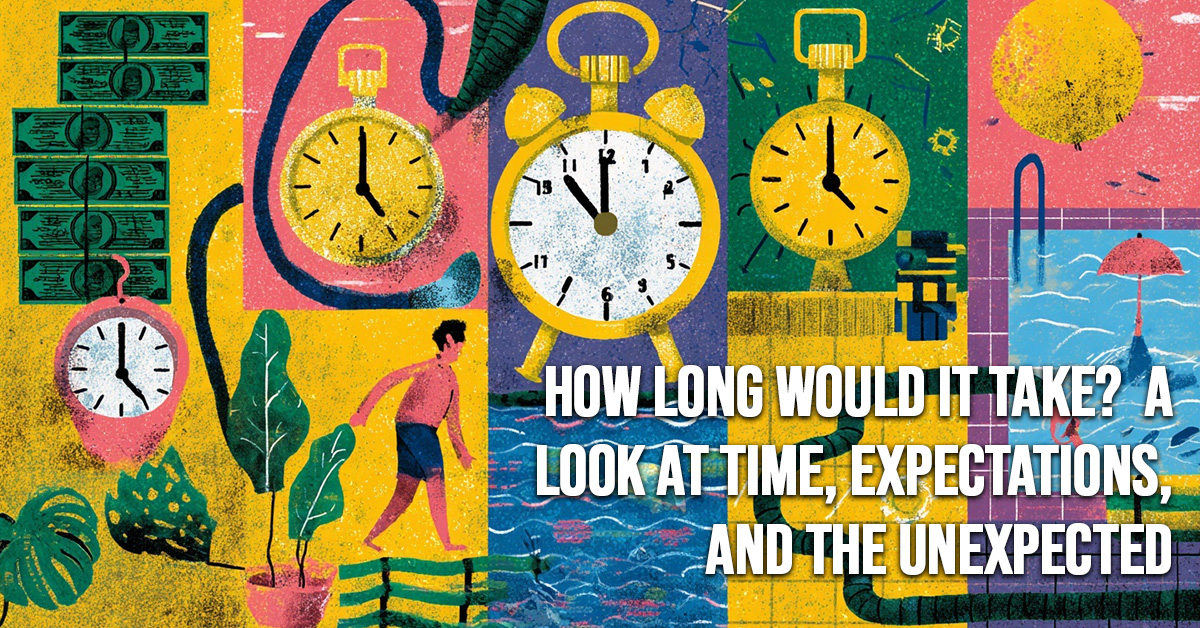
We’re all familiar with standard timelines: two years for an Associate’s Degree, four for a Bachelor’s, and perhaps 20 or 30 years to pay off a mortgage. But what about life’s more unusual aspirations or just-for-fun questions? Here are some interesting examples of how long certain things would take.
To Save a Million Dollars: Without the benefit of interest, you’d need to set aside $1,000 every month for 88 years to save a million dollars. This figure powerfully demonstrates the importance of smart investing and the incredible impact of compounding interest.
To Walk From New York to Los Angeles: The road distance between New York City and Los Angeles is approximately 2,799 miles. If you walked at an average pace of 3 mph, it would take a total of 955 hours of walking. Assuming you walked eight hours a day, seven days a week, the journey would take about 116 days, or just under four months.
To Grow a Foot of Hair: On average, a person’s hair grows at a rate of about half an inch per month. This means it would take a full two years to grow a foot of hair.
To Fill a Pool From a Garden Hose: The time it takes to fill a pool depends entirely on its size. For a standard 10,000-gallon pool, and assuming a garden hose delivers an average of 19 gallons per minute (GPM), it would take roughly 17 hours to fill. This time would, of course, decrease if you used more than one hose.
To Fly Around the World Non-Stop: Ignoring the logistical nightmare of refueling, a typical commercial airliner could circumnavigate the globe in approximately 50 hours. The real question is, unless you relish spending two days sealed in an aluminum tube, why would you want to?
To Watch Every Game of Your Favorite Baseball Team for an Entire Season: With an average Major League Baseball game lasting just over three hours and 162 games in a regular season, it would take you 486 hours, or a little over 20 days and six hours, to watch every game back-to-back, non-stop—and that’s not even accounting for rain delays!
To Watch Every Game of Your Favorite NFL Team in the Regular Season: With 17 games in the regular NFL season and each game taking about three hours and fifteen minutes, it would take 55.25 hours to watch the entire season of your favorite team. That’s just over two days of non-stop football.
To Drink a Full Keg of Beer: A full-size keg contains 15.5 gallons, which is about 165 12-ounce servings. If you drank a modest four beers per day, the keg would be empty in 42 days.
How long does it take to get a quote on your auto, home, life, or business insurance? It’s probably faster than you think, especially when our independent insurance agents do the shopping for you. We can quickly connect with multiple companies to find the best rates and coverage for your needs.
Do you have questions about your insurance? Find an insurance agent near you with our Agent Finder
Search All Blogs
Read More Blogs

Hitting the Trails: Why October Is the Ultimate Month for Hiking and Outdoor Exploration
Make the most of autumn weather with tips for safe, scenic weekend hiking and outdoor adventures.

Umbrella Policies for Businesses: Adding an Extra Layer of Defense Against Major Lawsuits
Shield your business assets from massive liability claims with a commercial umbrella policy.

Business Continuity Planning: Using Key Person Life Insurance to Protect Your Enterprise
Safeguard your company’s financial stability and continuity with strategic key person life insurance.

Understanding Uninsured Motorist Coverage: The Hidden Shield on Your Auto Policy
Protect yourself from reckless drivers with comprehensive uninsured motorist policy coverage.

Smart Home Tech and Insurance Discounts: How Automation Lowers Your Premiums
Lower your home insurance bills by integrating smart home monitoring and safety technology.

Fueling Your Body for Cooler Days: Exploring Autumn’s Best Harvest Superfoods
Boost your immune health and energy this fall with delicious seasonal harvest recipes and superfoods.

Beyond the Basics: Understanding the Critical Role of Business Interruption Coverage
Protect your company’s cash flow during unexpected operational shutdowns with business interruption coverage.

Locking In Your Advantage: Why Buying Life Insurance Early Locks in Lifetime Savings
See why locking in a life insurance policy during your 20s or 30s yields massive long-term savings.

Teen Drivers and Auto Insurance: Strategies for Managing Premiums Without Sacrificing Safety
Navigate adding a young driver to your auto policy while keeping premium costs under control.

The High Cost of Building: Why Your Home Replacement Value Needs an Update This Year
Ensure your home rebuilding limits keep pace with current construction inflation rates.