Decoding Your Home Insurance: Replacement Value vs. Market Value – What Every Homeowner Needs to Know
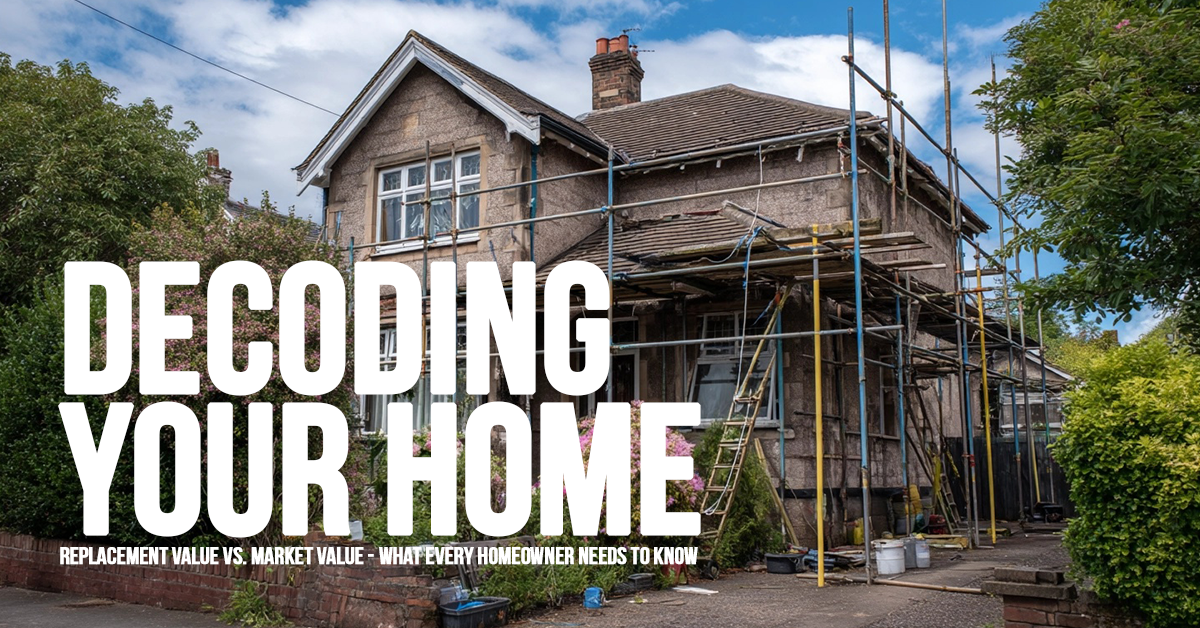
Decoding Your Home Insurance: Replacement Value vs. Market Value – What Every Homeowner Needs to Know
For homeowners, navigating the world of insurance can sometimes feel like deciphering a foreign language. Among the many terms and concepts, understanding the distinction between replacement value and market value is absolutely fundamental. It forms one of the core pillars upon which the adequate protection of your home rests. Failing to grasp this difference can lead to significant financialShortfalls in the event of a loss, leaving you vulnerable when you need your insurance the most.
Generally speaking, the market value of your home is heavily influenced by its location. Factors such as neighborhood desirability, school district quality, local amenities, and overall economic conditions play a significant role in determining what a buyer is willing to pay for your property. Consider two identical houses constructed in different areas. One might be situated in a vibrant, up-and-coming neighborhood with high demand, while the other could be located in a depressed urban area with lower property values. Despite being structurally the same, their market values could differ dramatically due solely to their geographical context.
Replacement value, on the other hand, operates on a different principle. It focuses on the cost of rebuilding your home to its current size and specifications using today’s materials and labor costs. While regional variations in construction costs can exist, the replacement value is generally less susceptible to the fluctuations of the real estate market driven by location. To illustrate this, imagine the same 1,500 square foot house, identical in every detail, built on three distinct properties: one in a struggling urban area, one in a flourishing suburb, and one with breathtaking ocean views. The cost of the raw materials (lumber, roofing, plumbing fixtures, etc.) and the labor required for reconstruction would likely be quite similar across all three locations. However, the market values of these three properties would likely be vastly different, primarily due to the desirability and perceived worth of the land itself. Importantly, your homeowners’ insurance policy is designed to help you rebuild the structure, not repurchase the land.
Given this crucial distinction, the overwhelming recommendation from insurance experts is to insure your home for 100% of its replacement value. This ensures that in the unfortunate event of a catastrophic loss – such as a fire, tornado, or other covered peril – you will have the financial means to rebuild your home to its original size and with comparable features. Insuring based solely on market value could leave you significantly underinsured. If your home is destroyed, your insurance payout might only reflect the current selling price of a similar property in your area, which, as we’ve seen, can be lower than the actual cost of rebuilding. This shortfall could force you to make difficult choices, potentially having to build a smaller home, use lower-quality materials, or even face significant out-of-pocket expenses.
One of the inherent challenges with homeowners’ insurance is that it often falls into the realm of “set it and forget it.” Many homeowners purchase a policy when they initially buy their house, and in numerous instances, that’s the last time they give it a second thought – until a claim needs to be filed. Years can pass, and significant changes can occur without the homeowner ever revisiting their coverage. This is precisely why scheduling an occasional homeowners’ insurance review is so critically important.
A policy review serves several vital purposes. Firstly, it refreshes your memory about the specifics of your coverage, ensuring you understand what is and isn’t protected. Secondly, it allows you to identify any potential gaps in your current coverage that may have arisen due to renovations, additions, or changes in your personal circumstances. For example, if you’ve added a significant extension to your home or upgraded to high-end finishes, your original policy’s coverage limits may no longer be adequate to cover the cost of rebuilding. Finally, a review can also uncover potential opportunities for savings. Insurance rates and available discounts can change over time, and a review by an independent agent can help you ensure you’re getting the most competitive price for the coverage you need.
Our team of independent home insurance agents is here to help you navigate these crucial decisions. We can provide you with a no-obligation insurance review and quote, taking the time to explain the difference between replacement value and market value in the context of your specific property. We’ll help you confirm that you have the coverage you believe you have and provide you with an updated quote to ensure your home is adequately protected at a competitive price. Don’t wait until disaster strikes to understand your homeowners’ insurance. Contact us today – we look forward to assisting you in safeguarding your most important investment.
Do you have questions about your insurance? Find an insurance agent near you with our Agent Finder
Search All Blogs
Read More Blogs

Hitting the Trails: Why October Is the Ultimate Month for Hiking and Outdoor Exploration
Make the most of autumn weather with tips for safe, scenic weekend hiking and outdoor adventures.

Umbrella Policies for Businesses: Adding an Extra Layer of Defense Against Major Lawsuits
Shield your business assets from massive liability claims with a commercial umbrella policy.

Business Continuity Planning: Using Key Person Life Insurance to Protect Your Enterprise
Safeguard your company’s financial stability and continuity with strategic key person life insurance.

Understanding Uninsured Motorist Coverage: The Hidden Shield on Your Auto Policy
Protect yourself from reckless drivers with comprehensive uninsured motorist policy coverage.

Smart Home Tech and Insurance Discounts: How Automation Lowers Your Premiums
Lower your home insurance bills by integrating smart home monitoring and safety technology.

Fueling Your Body for Cooler Days: Exploring Autumn’s Best Harvest Superfoods
Boost your immune health and energy this fall with delicious seasonal harvest recipes and superfoods.
Beyond the Basics: Understanding the Critical Role of Business Interruption Coverage
Protect your company’s cash flow during unexpected operational shutdowns with business interruption coverage.

Locking In Your Advantage: Why Buying Life Insurance Early Locks in Lifetime Savings
See why locking in a life insurance policy during your 20s or 30s yields massive long-term savings.

Teen Drivers and Auto Insurance: Strategies for Managing Premiums Without Sacrificing Safety
Navigate adding a young driver to your auto policy while keeping premium costs under control.

The High Cost of Building: Why Your Home Replacement Value Needs an Update This Year
Ensure your home rebuilding limits keep pace with current construction inflation rates.