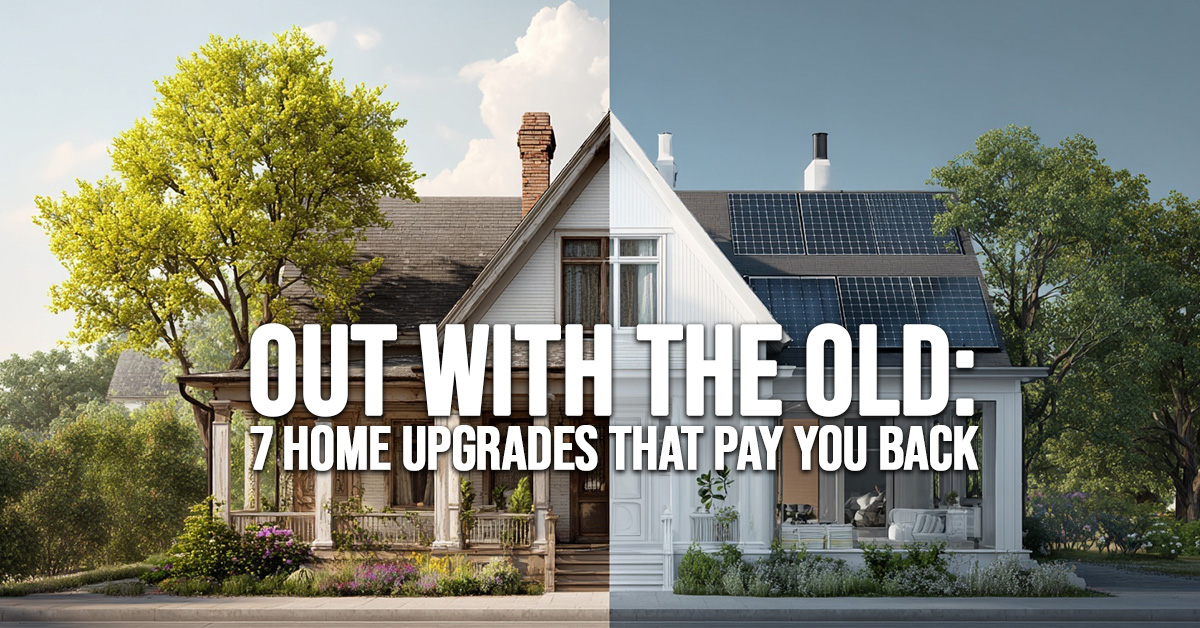
Out with the Old: 7 Home Upgrades That Pay You Back
Out with the Old: 7 Home Upgrades That Pay You Back
There’s an interesting phenomenon that often occurs if you decide to sell your home: suddenly, those minor imperfections, the dated fixtures, and the inefficient appliances you’ve been perfectly content living with for years transform into glaring flaws that simply must be upgraded before you list. It’s as if a new lens is applied, revealing all the areas ripe for improvement. But why wait until you’re selling? Whether you’re considering putting your home on the market or planning to enjoy it for decades to come, there are several things about your home you should immediately consider changing. Proactive upgrades can save you money, enhance your comfort, and boost your home’s long-term value.
You may be counting your blessings if you have a heating and air conditioning system that has diligently provided you with over 20 years of service. However, in reality, that loyalty may actually be costing you a significant amount of money each month. An HVAC System That’s Over 20 Years Old is almost certainly very inefficient, consuming far more power than today’s technologically advanced models. It is widely believed that a staggering 80% of your energy bill goes directly to powering your HVAC system. Modern units are designed with energy efficiency in mind, often recouping a portion of their installation cost in utility savings alone. Maybe it’s time to be proactive and invest in a more efficient system that provides consistent comfort without the excessive energy drain.
Another common energy culprit lurking in many homes is That Old Refrigerator in the Garage. Garages across America often house a retired kitchen refrigerator, sometimes very old, serving as an overflow appliance for drinks or extra food. There are two big problems here: firstly, old refrigerators are incredibly inefficient energy hogs and may cost you $50 or more monthly just to operate. Secondly, the fact that these refrigerators are operating in hot, non-air-conditioned garages exacerbates their inefficiency, forcing them to work even harder. You may be better off unplugging it or, if you need the extra cold storage, investing in a small, modern apartment-size refrigerator designed for efficiency.
If your home still features lighting and fixtures from decades past, it’s time for an update. 1970s Style Ceiling Fans are a prime example. While ceiling fans themselves are terrific for air circulation and energy savings, older models often look dated and operate less efficiently than their modern counterparts. Today’s ceiling fans offer sleeker designs, quieter operation, and significantly better energy efficiency. Upgrading a room or two (or three!) with modern ceiling fans is an affordable way to instantly enhance aesthetics and comfort.
Similarly, Fluorescent Tube Lighting belongs in the past, especially in living spaces. While they once dominated commercial and utilitarian spaces, fluorescent tube lighting is no longer acceptable in garages and basements, and certainly not in kitchens or bathrooms. Modern LED lighting looks so much better, offers superior and more even illumination, and is far more energy-efficient. You won’t have to worry about those big, clunky old tubes that often flicker, hum, or don’t seem to match anymore. Switching to LEDs is a relatively simple and highly impactful upgrade.
A more serious, often hidden, issue found in older homes is Ungrounded Wall Sockets. If you find yourself using three-to-two-prong adapters anywhere in your home to plug in modern appliances, it is a clear sign that it’s time for a critical electrical upgrade. If your home is old enough to have ungrounded sockets, it may have other significant wiring concerns as well, including an outdated fuse box or power panel that isn’t equipped to handle today’s electrical demands. This is not a DIY project – call a qualified electrician immediately to assess and upgrade your wiring for safety and modern functionality.
Beyond the fixed elements of your home, even your storage habits can benefit from an overhaul. Don’t be ashamed if you have Half-Empty Paint Cans scattered in your garage or basement – you are not alone! But at some point, you need to recognize that a five-year-old, quarter-gallon of paint from a long-forgotten project is not going to provide value or be usable for future touch-ups. Paint has a shelf life. Instead, store paint colors (and brands/sheens) in a digital file on your phone for future reference, and contact your community’s waste management for proper disposal techniques. Decluttering frees up space and reduces potential hazards.
Finally, while the investment might be larger, Single Pane Windows are another significant area for improvement. Like replacing an outdated HVAC system, new windows and doors won’t be inexpensive, but they can pay you back handsomely in multiple ways: substantial energy savings from improved insulation, added resale value to your home, enhanced security features, and even a quieter home environment by reducing outside noise. If you have older, especially 1970s and 1980s style, single-pane windows, start doing some research into modern, energy-efficient replacements.
Keeping up with a home is undeniably not easy; it’s a continuous process of maintenance and improvement. However, keeping your home insurance updated is easy, and just as crucial as maintaining your physical property. Contact one of our independent home insurance specialists for a free insurance review and price quote. We can ensure your most valuable asset is adequately protected, especially after you’ve invested in these important upgrades.
Do you have questions about your insurance? Find an insurance agent near you with our Agent Finder
Search All Blogs
Read More Blogs

The Refund Reinvestment: Why April is the Best Time to Pay Your Auto Insurance in Full
Got a tax refund? Turn it into a 10% gain by paying your auto insurance in full this April. Discover the math behind the “Paid-in-Full” discount.
Clean House, Clear Mind: Addressing Hidden Liability Risks During Spring Cleaning
Is your spring cleaning creating a safety hazard? Learn how to protect your home and your guests as you declutter this April.

From French Fish to Spaghetti Trees: The Bizarre History of April Fools’ Day
Why do we play pranks on April 1st? Explore the centuries-old history and the most famous “fools” in world history.

Serious Fun: Managing Liability on International Fun at Work Day
Celebrating International Fun at Work Day this Wednesday? Learn how to boost morale without creating an insurance or HR headache.

Spring Clean Your Beneficiaries: A New Quarter Checklist for Life Insurance
As we enter the second quarter of 2026, it’s time for a 5-minute life insurance audit. Ensure your coverage matches your family’s newest milestones.

Put the Phone Away or Pay: The High Cost of Distraction in April 2026
April starts a national crackdown on distracted driving. Discover how one text message can double your insurance rates for the next three years.
No Joke: Protecting Your Home and Liability During April Fools’ Week
Planning a prank this Wednesday? Make sure your sense of humor doesn’t trigger a homeowners insurance claim for property damage or personal injury.

The Ark and the Dove: Why We Celebrate Maryland Day on March 25th
Why March 25th? Discover the history of the Ark and the Dove and the “Free State” origins of Maryland Day.

Celebrating Maryland Day: A Guide to Regional Compliance and Mid-Atlantic Risks
Happy Maryland Day! A look at the unique insurance requirements and environmental risks for businesses operating in the Old Line State.

The March Deadline: Understanding Your Life Insurance “Conversion” Window
Is your term life insurance expiring soon? Learn how to “convert” your policy into permanent coverage this March without a new medical exam.